
 Media Stream Solutions
 Gaming Solutions
 E-Commerce Solutions
 VPN Server Solutions
 GPU Server Solutions
 Financial Solutions
 Security Solutions
Quick Summary
- Even a spectacular 90% CDN cache hit ratio leaves 10% of your traffic pulling directly from the origin server.
- If that origin sits in AWS, Google Cloud, or Azure, that remaining 10% gets expensive fast due to egress pricing.
- Moving your custom origin to bare metal changes this dynamic entirely, lowering data transfer costs and boosting I/O speeds.
Cloud infrastructure scales beautifully for compute-heavy tasks. Yet, when acting as a high-traffic CDN origin, it often becomes a structural bottleneck and a major cost center. The primary culprit is egress pricing.
Moving your custom origin to bare metal changes this dynamic entirely. Here is a breakdown of the architectural and financial differences.
Understanding the Custom CDN Origin
Think of global CDN edge servers as the waiters delivering food to a table. Your origin server is the kitchen. It acts as the single source of truth housing raw files, databases, and dynamic applications before they hit the cache.
Managing a custom origin means you are skipping managed storage buckets like Amazon S3. Instead, you run dedicated infrastructure to compile responses and store your source files.
5 Advantages of a Bare Metal Origin
Cloud environments slice physical machines into virtualized segments. Bare metal gives you the entire, unshared server. For a CDN origin, hardware exclusivity offers distinct advantages.
1. Eliminating Egress Fees
Cloud providers typically charge outbound data transfer (egress) fees between $0.08 and $0.12 per GB. Terabytes of cache misses compound this quickly. Bare metal providers—such as Hetzner, OVH, or BytesRack—flip this model. They generally offer unmetered 1Gbps, 10Gbps, or 40Gbps uplinks for a flat monthly rate, drastically cutting data transfer costs.
2. Maximum I/O Speed
Virtual machines share resources, creating virtualization overhead that caps disk input/output operations per second (IOPS). Bare metal connects your operating system directly to enterprise NVMe SSDs. This direct pipeline lets your origin serve massive files to edge nodes with microsecond latency.
3. Dedicated Resource Isolation
Cloud environments force you to share CPU cores and network cards with other tenants. If a neighboring user experiences a massive traffic spike, your performance can degrade. Bare metal guarantees 100% of the hardware throughput is dedicated exclusively to your workload.
4. Predictable Infrastructure Billing
Traffic spikes shouldn't wreck your budget. Fixed-rate leases with massive bandwidth allowances keep infrastructure costs flat. Your monthly invoice remains predictable regardless of how many cache misses your origin processes.
5. Cost-Effective Storage Density
Storing 50TB of media on cloud block storage carries a heavy premium. Bare metal servers allow you to install high-capacity enterprise drives directly. This yields massive storage density without the recurring monthly markup associated with cloud storage tiers.
Who Needs a Bare Metal Origin?
Bare metal isn't necessary for basic corporate sites or lightweight blogs. It fits specific, heavy-duty use cases:
- Media & Streaming: VOD, IPTV, and live streaming platforms pulling large media chunks constantly.
- High-Traffic E-commerce: Sites requiring raw CPU to render dynamic, uncacheable cart pages during flash sales.
- Software Distribution: Platforms pushing massive game patches, updates, and installers to a global audience.
- Asset-Heavy SaaS: Applications hosting terabytes of user-generated content, images, and documents.
Cloud Origin vs. Bare Metal Origin
| Feature | Cloud Origin (AWS / GCP / Azure) | Bare Metal Origin |
|---|---|---|
| Egress Cost | High ($0.08 - $0.12 per GB) | Flat Rate / Unmetered |
| Disk I/O | Shared / Limited by VM Tier | Maximum (Direct to NVMe) |
| Price Predictability | Volatile (Scales with traffic) | Fixed monthly cost |
| Resource Isolation | Shared (Noisy neighbor risk) | 100% Dedicated |
| Deployment Speed | Instant / Automated | Slower hardware provisioning |
Securing a Bare Metal Origin
Without managed cloud firewalls, securing bare metal falls entirely on your team. An exposed origin is a vulnerable one.
- IP Masking: Never expose the origin's true IP in your public DNS records. If attackers locate it, they can bypass the CDN entirely and launch direct network-layer DDoS attacks.
- Strict Firewalls: Configure UFW or iptables to drop all incoming traffic except for the verified IP ranges belonging to your CDN edge nodes.
- Hardware Redundancy: Bare metal lacks auto-healing. You must run at least two origin servers in separate data centers behind a load balancer to handle physical hardware failures gracefully.
💡 Internal Link Opportunity: If you want to eliminate third-party CDN costs completely, check out our guide on How to Build Your Own CDN Using Nginx and Dedicated Servers to deploy your own edge caching nodes.
The Bottom Line
Cloud environments handle lightweight, horizontally scaling web servers perfectly. However, they struggle financially as heavy CDN origins. Dedicated hardware gives you back control over disk I/O and stops cloud egress pricing from dictating your architecture.
Explore Dedicated ServersFrequently Asked Questions
-
Is it difficult to migrate a Cloud Origin to Bare Metal?
-
What happens to my CDN if my single Bare Metal origin goes down?
-
What is Origin Shielding?
Recent Topics for you
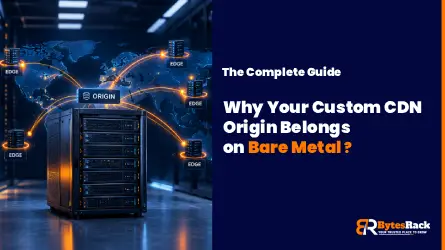
Why Your Custom CDN Origin Belongs on Bare Metal (And How to Escape Cloud Egress Fees)
Discover why moving your custom CDN origin to bare metal eliminates cloud egress fees, boosts NVMe I/O performance, and prevents unpredictable billing.

GPU vs CPU Dedicated Servers for AI Inference: Which Do You Actually Need?
Discover whether your AI inference workloads need a GPU or CPU dedicated server. Compare VRAM, TTFT, costs, and performance for 8B to 70B+ LLMs.

The GPU Sizing Guide for AI Agent Workloads on Dedicated Servers
Learn how to calculate exact GPU VRAM requirements for AI agents. Understand quantization, KV cache sizing, and choose the right dedicated server.

Why Los Angeles is the Ultimate Server Location for Cross-Pacific Gaming
Discover why Los Angeles dedicated servers provide unmatched transpacific low latency for gaming. Bridge US and APAC players with Tier-1 routing.

The London Advantage: Why UK Dedicated Servers are Vital
Discover why London dedicated servers are essential for global finance and tech. Explore ultra-low latency, UK GDPR compliance, and Tier-1 network benefits.
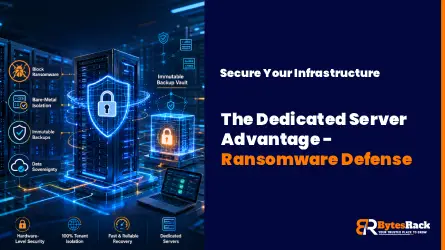
Ransomware Defense in 2026
Prevent ransomware in 2026 with isolated dedicated servers. Learn why bare-metal and immutable backups beat cloud storage for enterprise data security.

The Rise of Geo-Targeted Dedicated Servers for IoT
Explore why global enterprises are shifting to geo-targeted dedicated servers to eliminate latency, ensure data sovereignty, and power real-time industrial processing

Why Massive E-Commerce Stores Need Dedicated Servers
Find out why massive e-commerce stores need dedicated servers to scale. BytesRack explains how bare-metal stops downtime, cuts cloud fees, and boosts speed.
Why Low Latency Dedicated Servers Are Faster Than Your Workstation
Discover why professional studios are moving 4K/8K video editing to low-latency dedicated servers in 2026 to bypass hardware bottlenecks and thermal throttling.

The Rise of AI-Powered DDoS in 2026
AI-powered DDoS attacks are evolving faster than legacy firewalls can adapt. Discover why standard hosting is failing in 2026 and how enterprise-grade, unmetered DDoS dedicated servers can keep your infrastructure online.
Why Your Server Location Matters: The Singapore Advantage for APAC Speed and SEO
Need to serve the APAC region? A Singapore server location provides the lowest latency. Learn how proximity boosts your site speed, Core Web Vitals, and SEO rankings.

Why MCP Servers Belong on Dedicated Hardware?
Discover why Model Context Protocol (MCP) nodes require dedicated hardware to avoid the 2-second Cold Start bottleneck of serverless functions.
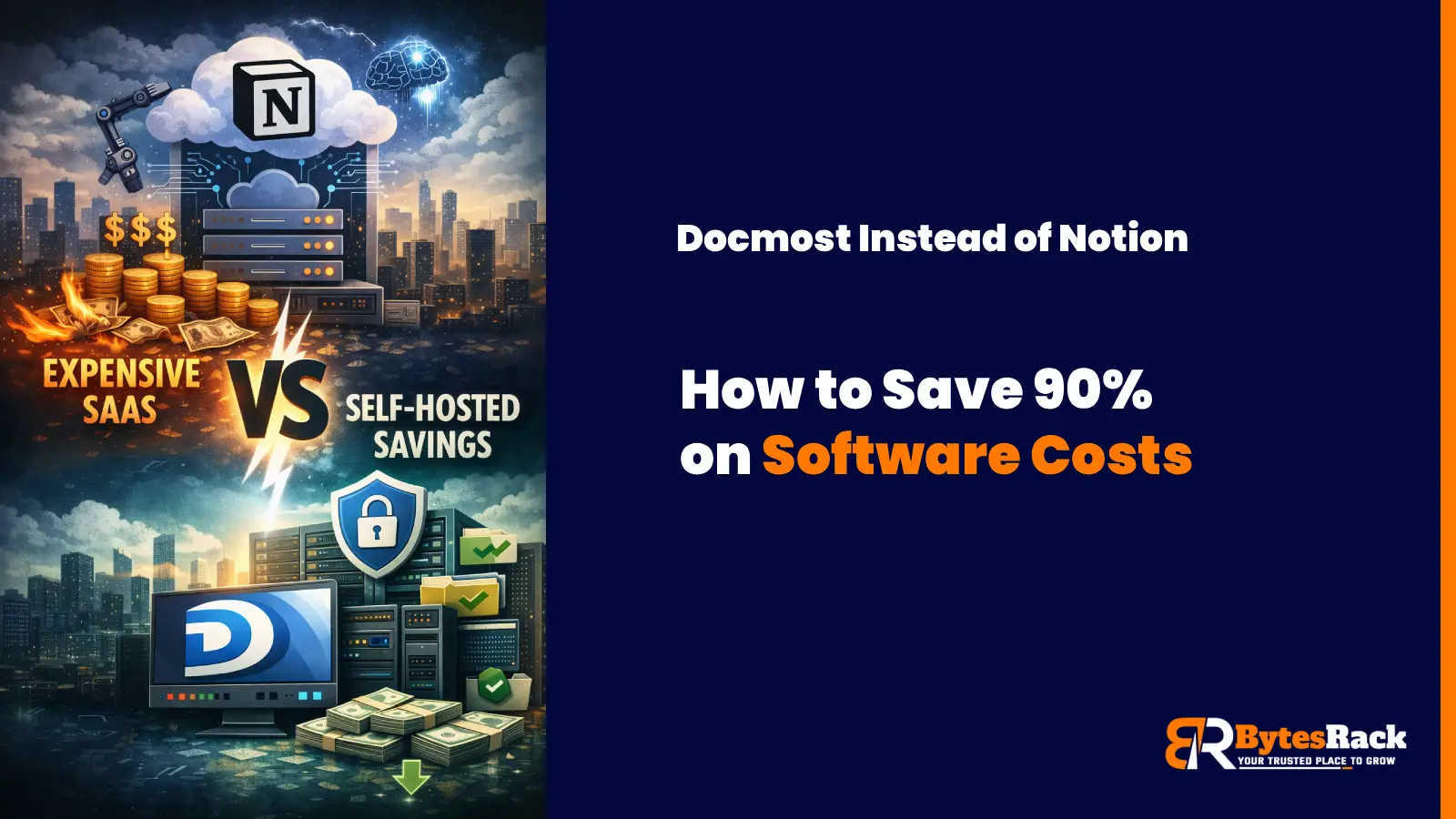
Docmost Instead of Notion:How to Cut Your Costs by 90% in 2026
Stop renting your data. Discover why companies switch to self-hosted Docmost and Outline Wiki on BytesRack dedicated servers to save 90% and regain privacy..
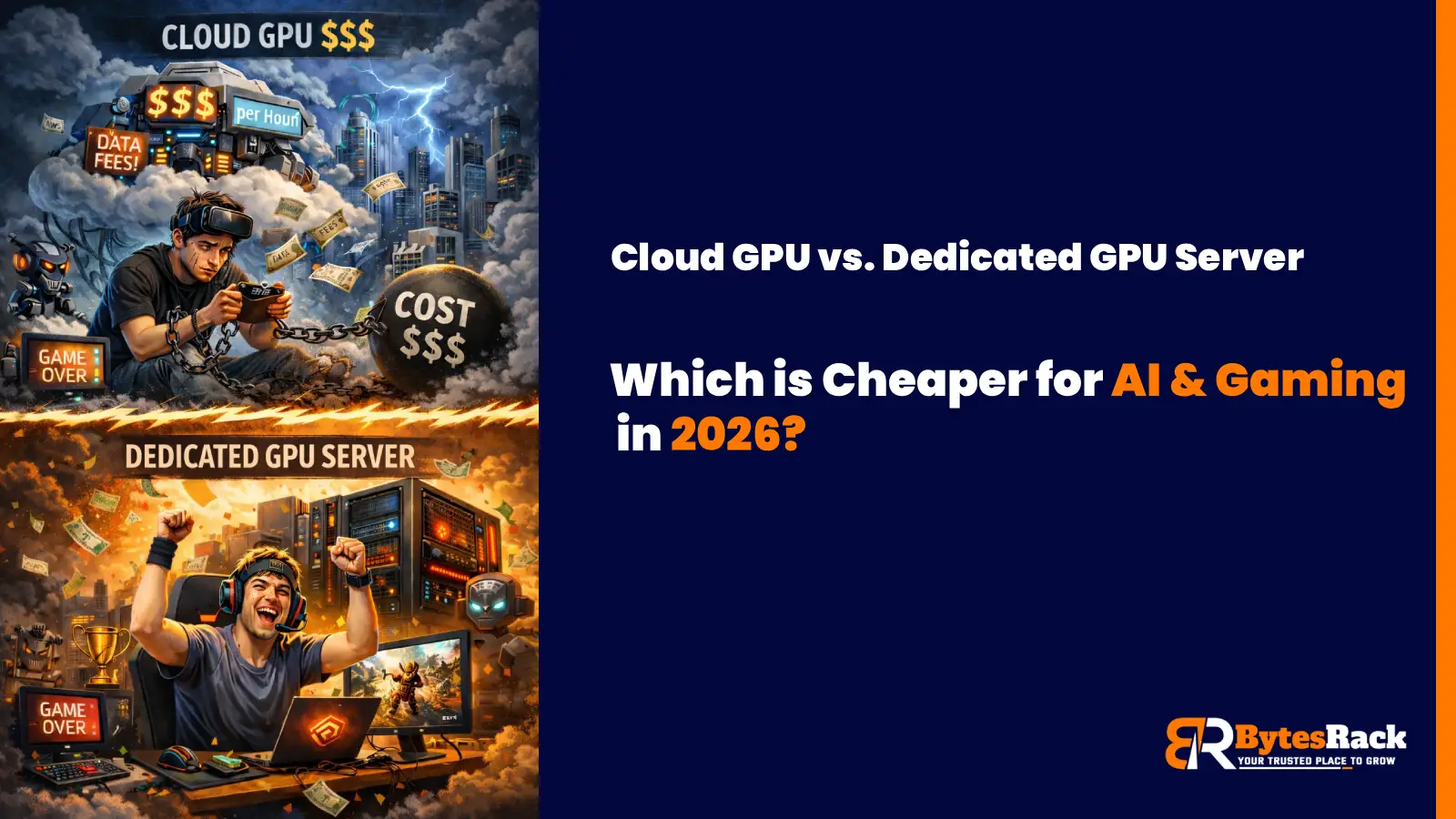
Cloud GPU vs. Dedicated GPU Server
In 2026, the smart move for AI startups and high-performance gaming communities isn't the Cloud; it's Dedicated GPU Servers.

Power Your Business with a Toronto Dedicated Server
Learn how Toronto's unique submarine cable gives our dedicated servers a speed advantage for serving Canada and the US.
The Miami Advantage:Why Your Dedicated Server Belongs at the Gateway to the Americas
Discover why a Miami dedicated server is your secret weapon. Get unrivaled low latency to Latin America & the US. Unlock strategic growth today.
Why Your Business Needs a Tokyo Dedicated Server from BytesRack
This guide will explore why Tokyo is the undisputed strategic hub for APAC and how BytesRack's dedicated servers provide the power, performance, and reliability you need to dominate the market.
Gain the Ultimate Edge: The Power of a New York Dedicated Server
Discover why New York offers the ultimate hosting advantage. Unrivaled connectivity to US & European markets

Why Germany Is the Best Location for Your Next Dedicated Server?
Discover why Germany offers the best hosting. GDPR compliance, ultra-low latency via DE-CIX Frankfurt, and enterprise-grade reliability.

Which Web Hosting Control Panel Should You Use?cPanel or Plesk
In this blog, we’ll break down the differences between cPanel and Plesk, helping you decide which control panel suits your hosting environment and technical needs best.

How to Restore SQL Server Databases Using SSMS
Learn how to restore MSSQL databases using SQL Server Management Studio (SSMS) with expert tips and best practices.

The Ultimate Guide to Dedicated Servers for Streaming - 2025
Boost performance, reduce buffering, and scale with confidence. These expert tips help you optimize your dedicated streaming server for speed, security, and seamless viewer experience.